

Want to know how to publish a board game and actually make money from it?
You’re in the right place.
The board game industry is absolutely booming right now. We’re talking about a market that hit $14.37 billion in 2024 and is projected to reach $32 billion by 20321.
But here’s the thing:
Most aspiring game designers have NO clue where to start.
They think publishing a board game is just about having a “cool idea” and throwing it on Kickstarter.
(Spoiler alert: it’s not.)
Today, as a professional board games manufacturer, I’m going to show you the exact process for turning your board game concept into a profitable reality. This is the same step-by-step system that successful publishers use to launch games that actually sell.
Sound good? Let’s dive in.

2 Main Board Game Publishing Paths
Before we get into the nitty-gritty, you need to understand something important:
There are essentially two ways to get your board game published.
Traditional Publishing
This is where you pitch your finished game to established publishers like Asmodee or Stonemaier Games1.
The Good:
- They handle ALL the business stuff (manufacturing, marketing, distribution)
- No upfront costs for you
- Access to their existing retail networks
The Bad:
- You’ll only get 3-8% royalties on each game sold
- Limited creative control
- EXTREMELY competitive (most publishers reject 95%+ of submissions)
- Can take 2+ years from contract to store shelves
Self-Publishing
This is where YOU become the publisher. You handle everything from manufacturing to marketing to fulfillment.
The Good:
- Complete creative control
- Higher profit margins (potentially 10-20x more per unit)
- Direct relationship with your customers
The Bad:
- Significant upfront investment ($20,000-$100,000+)
- You’re responsible for EVERYTHING
- Higher risk if the game flops
Pro Tip: If this is your first game, I personally recommend starting with self-publishing through crowdfunding. It’s become the standard approach for indie designers, and you’ll learn the entire business in the process.
How to Publish a Board Game
Step 1: Perfect Your Game Design
Here’s where most people mess up:
They rush to publish before their game is actually ready.
Don’t be that person.
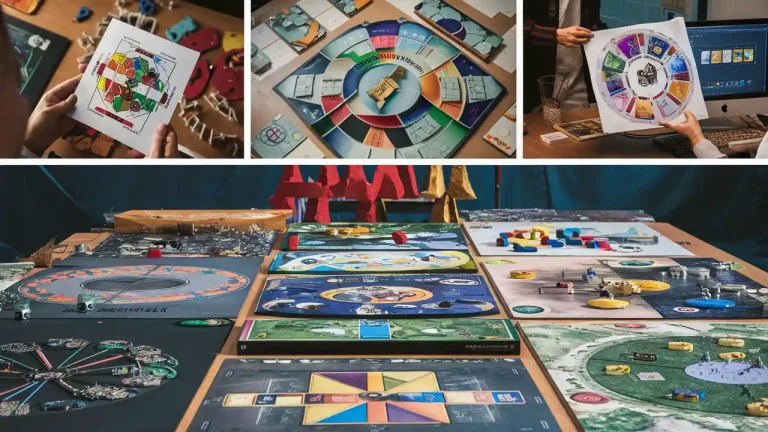
Create a Solid Prototype
Your prototype doesn’t need to be pretty. It needs to be functional.
I’m talking about:
- Basic cardstock components
- Hand-drawn artwork (seriously, stick figures are fine)
- Clear, testable mechanics
The goal here is simple: prove that your game actually works.
Playtest Until You’re Sick of It
This is probably the most important step in the entire process.
You need to playtest your game with:
- Friends and family (but don’t stop here)
- Strangers at local game stores
- Online communities like BoardGameGeek
- Game designer meetups in your area
Here’s what I’ve learned from successful designers: you’ll probably need to playtest your game 100+ times before it’s ready for publication.
Why so many?
Because each playtest session reveals new issues, balance problems, and opportunities for improvement.
Develop Your Theme
Your game’s theme isn’t just “decoration.” It should enhance the gameplay experience.
For example:
- A cooperative game works great with themes like “surviving a zombie apocalypse”
- Strategy games pair well with historical or fantasy themes
- Party games benefit from humor and social interaction themes
The key is making sure your theme and mechanics work together seamlessly.
Step 2: Choose Your Publishing Route
Assuming you’re going the self-publishing route (which I recommend), you have a few options:
Crowdfunding Platforms
Kickstarter is the gold standard for board game publishing. In 2024, tabletop games raised over $220 million on the platform1.
But here’s the reality check:
Only about 42% of Kickstarter projects actually succeed2. And even fewer make enough money to justify the effort.
Other platforms to consider:
- Gamefound (specifically for board games)
- Indiegogo
- BackerKit (for post-campaign management)
Direct Sales
Some publishers skip crowdfunding entirely and sell directly to consumers through:
- Their own websites
- Amazon
- Local game stores
- Gaming conventions
This approach requires more upfront capital but gives you complete control over pricing and customer relationships.
Step 3: Create Professional Components
This is where your game starts looking like a real product.
Hire Professional Artists
Unless you’re a skilled artist yourself, you’ll need to hire professionals for:
- Game artwork and illustrations
- Graphic design and layout
- Box art and branding
Budget expectations:
- Basic artwork: $500-$2,000
- Professional illustration: $2,000-$10,000+
- Graphic design: $1,000-$5,000
Pro Tip: Consider offering artists a percentage of your crowdfunding campaign instead of upfront payment. Many talented designers are willing to work for profit-sharing arrangements.
Component Quality Matters
Players judge games by their components. Period.
Focus on:
- Card quality: Go for linen finish or aqueous coating
- Board thickness: 2mm minimum for durability
- Token quality: Avoid cheap plastic when possible
- Box design: This is your product’s “book cover”
Step 4: Launch Your Crowdfunding Campaign
Here’s where the rubber meets the road.
Pre-Launch Marketing (Start 6+ Months Early)
The biggest mistake I see? Launching a campaign without building an audience first.
Successful campaigns typically have:
- 1,000+ email subscribers before launch
- Active social media presence
- Reviews from board game influencers
- Playtest videos and developer diaries
Campaign Page Optimization
Your campaign page needs to answer three questions within 10 seconds:
- What is this game about?
- Why should I care?
- How much does it cost?
Essential elements:
- Compelling main image/video
- Clear gameplay overview
- High-quality component photos
- Transparent timeline and costs
- Engaging stretch goals
The Marketing Blitz
Plan to spend 15-20% of your funding goal on marketing.
This includes:
- Facebook and Google ads
- Influencer partnerships
- Convention demos
- Email marketing campaigns
- Social media content
Case Study: The team behind Critter Kitchen spent $70,000 on marketing during their campaign and raised over $1 million from 13,000+ backers1.
Step 5: Manufacturing and Production
Once your campaign succeeds, the real work begins.
Finding a Manufacturer
Most board games are manufactured in China due to cost and quality considerations.
Top manufacturers to research:
- Panda Games
- Nanjian Games
- Longpack Games
- Gameland
What to consider:
- Minimum order quantities (usually 1,000+ units)
- Quality control processes
- Communication and English proficiency
- Previous work with similar games
Cost Breakdown
For a typical game with 1,000 units:
- Manufacturing: $5-$15 per unit
- Shipping from factory: $1-$5 per unit
- Import duties and taxes: $0.50-$3 per unit
- Fulfillment and packaging: $1-$5 per unit
Total per unit cost: $7.50-$28
Quality Control
This is CRUCIAL. One bad print run can destroy your entire campaign.
Always:
- Request pre-production samples
- Inspect components before mass production
- Have a backup plan for quality issues
Step 6: Marketing and Distribution
Your game is manufactured. Now what?
Fulfillment Strategy
Most successful publishers use third-party fulfillment centers for:
- Inventory storage
- Order processing
- International shipping
- Customer service
Popular options include Quartermaster Logistics and Easyship.
Ongoing Sales Channels
Don’t stop at crowdfunding. Build long-term sales through:
- Direct sales via your website
- Amazon for broader reach
- Local game stores for community building
- Gaming conventions for face-to-face marketing
- International distributors for global expansion
Building Your Brand
Think beyond your first game. Successful publishers build recognizable brands that customers trust.
This means:
- Consistent visual identity
- Regular content creation
- Community engagement
- Transparent communication
Common Mistakes to Avoid
After analyzing hundreds of board game campaigns, here are the biggest pitfalls:
Mistake #1: Rushing to Market
The Problem: Publishing before your game is truly ready.
The Solution: Playtest extensively and get brutal feedback from strangers.
Mistake #2: Underestimating Costs
The Problem: Setting funding goals too low.
The Solution: Add 20-30% buffer to all cost estimates.
Mistake #3: Ignoring Marketing
The Problem: Expecting your great game to sell itself.
The Solution: Start marketing 6+ months before launch.
Mistake #4: Poor Communication
The Problem: Going silent when problems arise.
The Solution: Over-communicate with backers, especially about delays.
Mistake #5: Overlooking Legal Issues
The Problem: Not protecting your intellectual property.
The Solution: Consult with an attorney about trademarks and copyrights.
The Bottom Line
Publishing a board game in 2025 is more accessible than ever, but it’s also more competitive.
The key to success? Treat it like a real business from day one.
That means:
- Investing in quality components and artwork
- Building a genuine community around your game
- Planning for long-term success, not just one campaign
- Learning from both successes and failures
Remember: most successful game publishers didn’t hit it big with their first game. They learned the process, built relationships, and gradually improved their approach.
If you’re serious about learning how to publish a board game, start with one amazing game, execute flawlessly, and use that success as a foundation for future projects.
The board game industry needs more passionate, professional publishers. Why not let that be you?
 English
  Chinese
  German
  French
  Spanish