
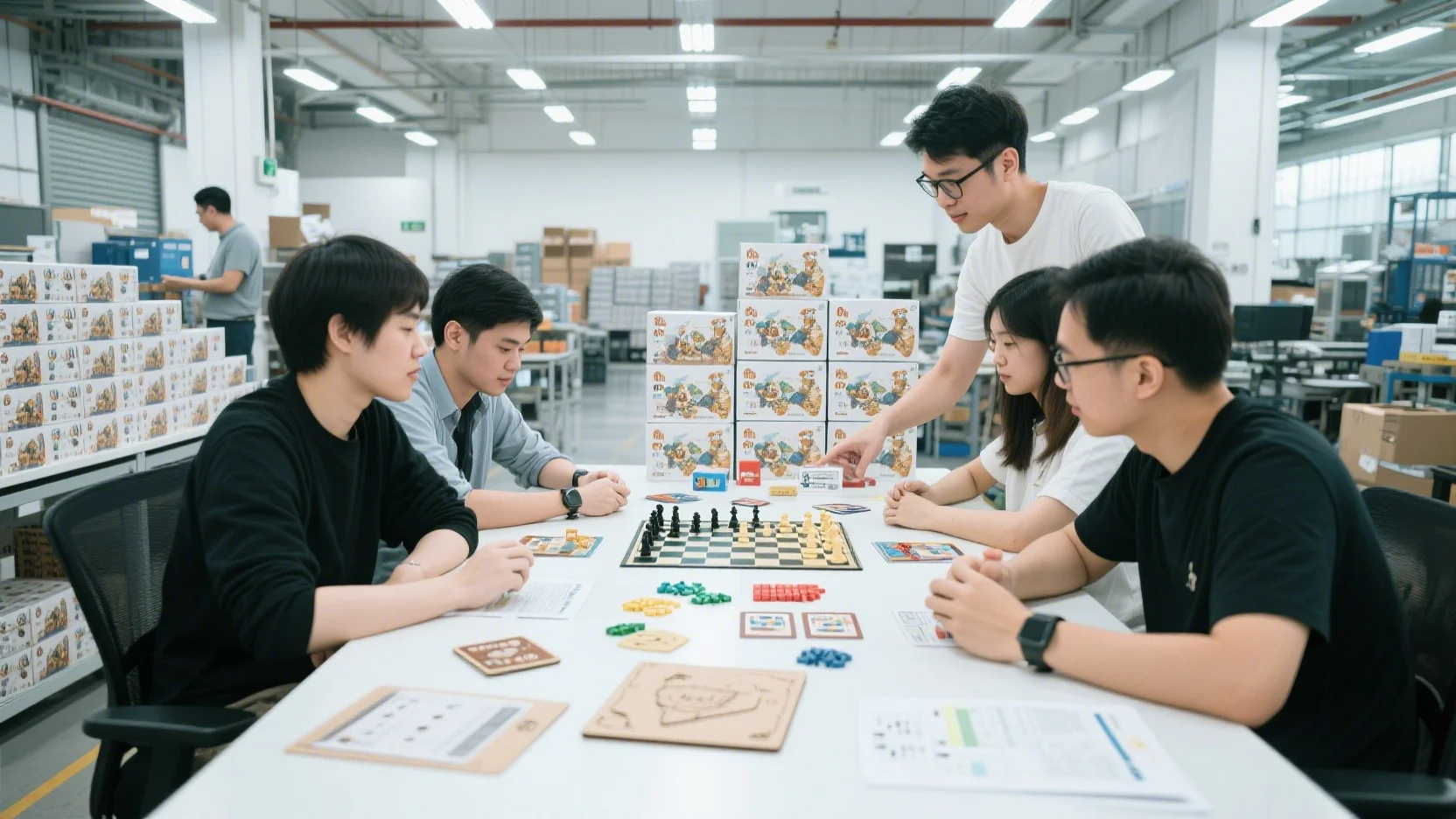
If you’re reading this, you’re likely exploring alternatives to manufacturing board games in China. Maybe tariffs are eating into your margins. Or perhaps you want a “Made in Singapore” label to appeal to eco-conscious Kickstarter backers. Whatever the reason, manufacturing board games outside of China is no longer a niche strategy—it’s a smart pivot for brands aiming to thrive in 2025.
In this guide, I’ll break down exactly how to shift production out of China without sacrificing quality or speed. You’ll discover why Singapore is emerging as a top alternative, how to optimize your supply chain for limited runs, and actionable steps to position your brand as a premium player in the $12B board game industry.
Let’s roll.
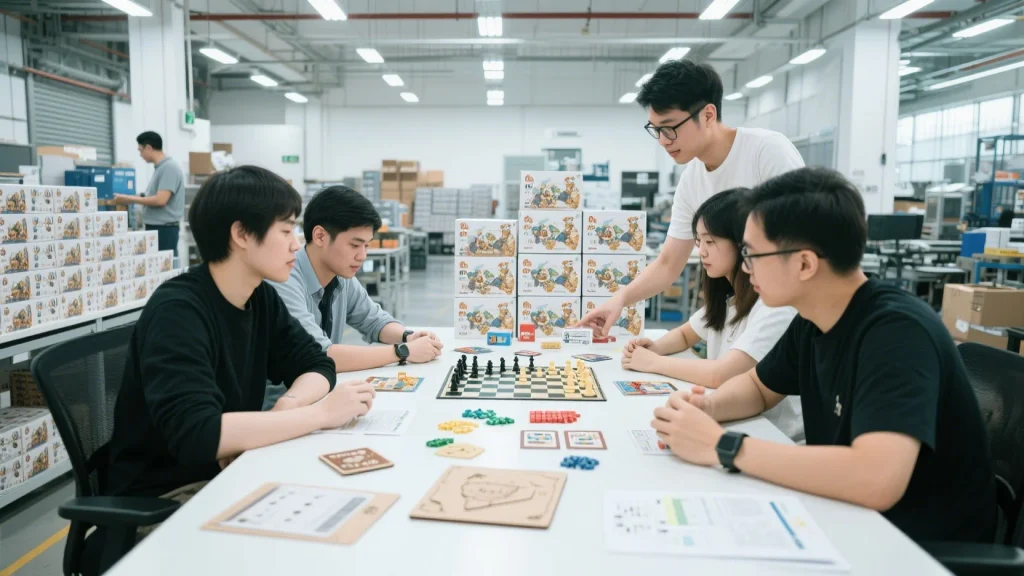
Why Consider Manufacturing Board Games Outside China?
China has long dominated global manufacturing, thanks to its unbeatable cost efficiency and massive production ecosystem. But in 2025, relying solely on Chinese factories comes with risks:
– Tariff headaches: U.S. import taxes on Chinese goods can spike to 125%, eroding profits.
– Scalability vs. flexibility: While China excels at mass production, smaller brands struggle with high MOQs (Minimum Order Quantities).
– Reputation nuances: “Made in China” still carries baggage for premium brands, despite improvements in quality.
This doesn’t mean abandoning China entirely. But diversifying your production base—or shifting it altogether—could future-proof your business.
Made in Singapore vs. China: The 2025 Breakdown
To help you decide, here’s a side-by-side comparison of manufacturing board games in China versus Singapore:
| Factor | Made in China | Made in Singapore |
|---|---|---|
| Cost Efficiency | ✔ Unmatched low costs | ✕ Higher labor/material costs |
| Scalability | ✔ Built for 10k+ unit runs | ✔ Ideal for 500–5k units (Kickstarter!) |
| Quality Perception | 🍷 Standard (improving) | 🍷 Premium, globally trusted |
| Supply Chain | ✔ Deep local network (no imports needed) | 🍷 Reliant on imported components |
| Speed | ✔ Rapid prototyping + mass production | 🍷 Faster logistics to Western markets |
| Tariffs | ✕ Up to 125% for U.S. imports | ✔ As low as 10% for some products |
Singapore isn’t the cheapest, but it’s a strategic play for brands prioritizing trust, flexibility, and premium positioning.
Case Study: How “Mythic Quest” Scaled with Singaporean Manufacturing
Take the indie board game Mythic Quest. In 2024, they launched a Kickstarter campaign for a 2,000-unit run.
Problem: Their Chinese factory demanded a 5k MOQ. Paying for 3k extra units they didn’t need would’ve sunk their budget.
Solution: They partnered with a Singaporean manufacturer specializing in small-batch production.
Result:
– Saved $27k on excess inventory.
– Used the “Made in Singapore” label to justify a 30% price premium.
– Delivered orders 12 days faster to U.S. backers due to streamlined logistics.
Bottom line: For limited editions or crowdfunded projects, Singapore offers agility that China can’t match.
How to Manufacture Board Games Out of China (Step-by-Step)
Ready to pivot? Follow this 5-step framework:
Step 1: Audit Your Current Supply Chain
Start by mapping every component of your board game production:
– Materials: Are wooden pieces, cards, or plastic miniatures sourced from China?
– Labor: Which stages (design, printing, assembly) rely on Chinese factories?
– Logistics: How do products ship to your customers?
This audit will reveal dependencies. For example, you might realize that while plastic tokens are cheaper in China, packaging can be shifted to Vietnam or Malaysia.
Step 2: Vet Singaporean Manufacturers
Not all Singaporean factories are created equal. Prioritize partners with:
– Experience in board games: Look for expertise in printing, die-cutting, and QA.
– Transparent pricing: Avoid hidden fees for tooling or design changes.
– Sustainability credentials: 68% of board gamers prefer eco-friendly packaging (2025 Nielsen data).
Pro Tip: Use LinkedIn to find manufacturers who’ve worked with brands like Days of Wonder or Stonemaier Games.
Step 3: Optimize for Smaller Batches
Singapore shines for small-to-mid runs. To maximize efficiency:
– Simplify components: Reduce unique parts (e.g., standardize card sizes).
– Pre-order models: Use Kickstarter pledges to lock in exact quantities.
– Hybrid sourcing: Import cost-effective materials from Vietnam, then assemble in Singapore.
Step 4: Leverage the “Singapore Premium”
A “Made in Singapore” label isn’t just a stamp—it’s a marketing tool.
– Highlight quality control: “Each game inspected 3x before shipping.”
– Emphasize ethical labor: Singapore’s strict labor laws resonate with EU/U.S. buyers.
– Use storytelling: Share factory photos and worker profiles in your campaign.
Step 5: Master Tariff-Friendly Logistics
Singapore has free trade agreements (FTAs) with the U.S., EU, and China. Work with a customs broker to:
– Classify your board games under the correct HS code.
– Slash tariffs (e.g., U.S. imports drop from 125% to 10% for eligible products).
– Pre-clear shipments to avoid delays.
“Small-batch manufacturing in Singapore lets you test new game mechanics without committing to 10k units. Pair this with Kickstarter fulfillment centers in Rotterdam, and you’ve got a lean, global operation.”
The Future of Board Game Manufacturing (Beyond 2025)
China isn’t going anywhere—but the rise of regionalized supply chains will redefine the industry. Expect:
– AI-driven prototyping: Generate 3D models of game pieces in hours, not weeks.
– Nearshoring: Eastern European factories catering to EU markets.
– Blockchain QA: Immutable records proving ethical sourcing and quality checks.
Final Thoughts
Shifting production from China to Singapore (or other alternatives) isn’t about rejecting China’s strengths—it’s about diversifying risk and capturing premium demand.
In 2025, the most successful board game brands will:
– Use China for mass-market titles.
– Reserve Singapore for limited editions and crowdfunded projects.
– Continuously audit tariffs and trade policies.
If you are looking to manufacture board game products outside of China, NanJian Games would be an excellent choice. They are the largest board game factory in Singapore.
They have state-of-the-art production facilities equipped with advanced machinery designed to maximize efficiency and automation. Each aspect of their manufacturing process, from design validation to assembly and quality control, is carefully optimized for smooth operation.
Their proficiency in manufacturing board games isn’t just about making products; it’s a dedication to achieving excellence. Recognizing the complexity of tabletop gaming, they constantly improve the methods to meet the rigorous standards of leading brands.

 English
  Chinese
  German
  French
  Spanish