
Want to create your own board game but don’t know where to start? You’re in the right place.
In this guide, as a professional custom board games manufacturer, I’m going to show you exactly how to make your own board game ideas from scratch.
These are the same strategies that game designers use to create bestselling games that people love.
And today, I’m going to share them with you.
Let’s dive in.

Why Create Your Own Board Game?
Board games are experiencing a massive renaissance right now.
In fact, the global board game market is projected to reach $30 billion by 2026.
Why? Because people are craving real-world connections in our digital age.
I’ve personally created several board games for friends and family (more on that later), and I can tell you: there’s nothing quite like watching people enjoy something you’ve created.
Plus, with platforms like Kickstarter, indie game designers are finding success like never before.
But before you can launch the next Catan or Wingspan, you need a solid game idea.
How to Make Your Own Board Game Ideas: The Complete Process
Let me break this down into actionable steps:
1. Decide What Kind of Game You Want to Create
The first step in how to make your own board game ideas is figuring out what type of game excites you most.
Here are some popular categories:
- Strategy games: Think Chess, Risk, or Catan
- Party games: Like Pictionary or Cards Against Humanity
- Roll-and-move games: Classic examples include Monopoly or Life
- Worker placement games: Such as Agricola or Lords of Waterdeep
- Cooperative games: Where players work together against the game (Pandemic)
- Card-driven games: Like Magic: The Gathering or Dominion
Pro tip: Start by looking at games you already love. What mechanics and themes get you excited? This is often the best foundation for your own creation.
2. Choose a Compelling Theme
Your theme is what your game is about—the setting, story, and context.
Popular board game themes include:
- Fantasy worlds
- Historical events
- Science fiction
- Everyday life scenarios
- Business and economics
- Adventure and exploration
The best themes do two things:
- They excite YOU (because you’ll spend countless hours with this theme)
- They connect naturally with your game mechanics
For example, if you’re creating a trading game, a theme about merchant caravans makes more sense than one about submarine warfare.
3. Define Your Core Mechanics
This is the heart of how to make your own board game ideas stand out.
Game mechanics are the rules and systems that create the gameplay experience. Some popular mechanics include:
- Dice rolling
- Card drawing
- Resource management
- Area control
- Pattern building
- Set collection
- Auction/bidding
The key is to choose mechanics that:
- Support your theme
- Create interesting decisions
- Are easy to learn but offer depth
For example, my game “Startup Hustle” uses resource management and press-your-luck mechanics to simulate the experience of building a tech company.
4. Identify Your Target Audience
Who are you designing this game for? This question will guide many of your decisions.
Consider:
- Age range (kids, families, adult gamers)
- Experience level (casual players or hardcore enthusiasts)
- Play preferences (competitive vs. cooperative)
- Complexity tolerance (simple rules or deep strategy)
Understanding your audience helps you make critical design choices about complexity, play time, theme, and more.
5. Set Your Game Parameters
Before diving into detailed design, establish some basic parameters:
- Player count: How many people can play? (2-4 is common)
- Play time: How long should a game last? (30-60 minutes is a sweet spot for many players)
- Complexity level: How difficult should your game be to learn and master?
- Setup time: How long should it take to get playing?
These parameters act as guardrails for your design process.
6. Brainstorm Unique Twists
Now comes the creative part—how will your game stand out?
Ask yourself:
- What can I add to familiar mechanics to make them feel fresh?
- What combination of mechanics hasn’t been tried before?
- How can I solve common frustrations in similar games?
- What would surprise and delight my target audience?
For example, Wingspan took the familiar worker placement mechanic but applied it to bird watching with gorgeous artwork and educational content—creating something fresh and appealing to a broader audience than typical strategy games.
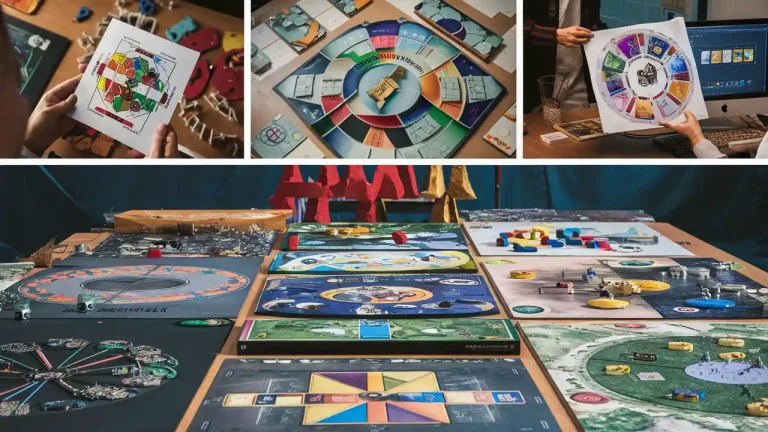
7. Create a Quick Prototype
Don’t wait until everything is perfect—create a rough prototype ASAP.
Your first prototype should be:
- Cheap (index cards, paper, borrowed pieces from other games)
- Functional (focuses on mechanics, not aesthetics)
- Flexible (easy to change as you test)
I recommend starting with just the core mechanics. You can add complexity later.
For my first prototype of “Startup Hustle,” I used index cards, poker chips, and dice. It was ugly but playable in just a few hours!
8. Test Solo
Before involving others, play against yourself multiple times.
During solo testing:
- Focus on basic functionality
- Look for obvious problems
- Try different strategies
- Make quick iterations
This stage helps you iron out major issues before subjecting friends to an unplayable game.
9. Test With Others (The Most Important Step)
This is where the real design work happens.
Gather a few friends or family members who match your target audience and watch them play. Important: after explaining the rules, try not to intervene. Just observe.
Pay attention to:
- Where players get confused
- When they seem bored or frustrated
- Unexpected strategies they discover
- Their emotional reactions
After the game, ask specific questions:
- “What was the most fun part?”
- “What was confusing or frustrating?”
- “Did you feel like your choices mattered?”
- “Would you want to play again?”
10. Iterate, Iterate, Iterate
Based on testing feedback, refine your game. Then test again.
This cycle might repeat10, 20, or even 50times before your game truly shines.
Remember: every great game was terrible at first. The difference is that great designers keep improving.
Some common issues you’ll need to address:
- Balance problems (overpowered strategies)
- Pacing issues (downtime, game length)
- Clarity of rules
- Fun factor
11. Add Polish and Theme Integration
Once your core game works well, strengthen the connection between mechanics and theme.
Ask yourself:
- Do the game mechanisms reinforce the story I’m trying to tell?
- Does the terminology match the theme?
- Can I replace generic components with thematic ones?
For example, instead of “victory points,” a pirate-themed game might award “treasure” or “infamy.”
12. Document Your Rules Clearly
Finally, write down your rules in clear, organized fashion.
A good rulebook:
- Starts with a theme overview and component list
- Explains setup step-by-step
- Presents rules from simple to complex
- Includes examples and visuals
- Anticipates common questions
As someone who’s reviewed hundreds of rulebooks, I can tell you this: clarity matters more than creativity here.
Common Mistakes to Avoid When Creating Board Game Ideas
Through my years of game design and talking with other creators, I’ve noticed these frequent pitfalls:
1. Starting Too Complex
Many first-time designers try to create their dream game with dozens of mechanics, elaborate stories, and complex interactions.
The result? An unfocused game that’s hard to learn and even harder to balance.
Start simple. You can always add complexity later.
2. Copying Without Innovation
While it’s good to draw inspiration from games you love, simply recreating an existing game with minor changes rarely leads to something special.
Always ask: “What am I adding that’s new and interesting?”
3. Ignoring Feedback
This is the biggest killer of promising game ideas.
When playtesters say something isn’t working, believe them. They might not know how to fix it (that’s your job), but they can tell you when something isn’t fun.
4. Overinvesting Too Early
I’ve seen designers spend thousands on artwork and components before confirming their game works.
This is backward. Get the gameplay right first, then invest in making it look good.
5. Designing in Isolation
Board games are social experiences. If you’re creating alone without regular outside input, you’re likely missing crucial perspectives.
Join design groups, attend playtesting events, or find online communities to share ideas.
Board Game Design Resources for2025
Want to take your game design skills further? Here are some current resources I recommend:
Communities
- Board Game Geek’s Design Forum
- The Game Crafter Community
- Reddit’s r/tabletopgamedesign
Books
- “Characteristics of Games” by Skaff Elias
- “The Art of Game Design” by Jesse Schell
- “Building Blocks of Tabletop Game Design” by Geoffrey Engelstein
Tools
- Tabletop Simulator (digital prototyping)
- Canva (for card and board design)
- The Game Crafter (print-on-demand services)
The Bottom Line
Creating your own board game ideas isn’t just about the end product—it’s about the journey of creative problem-solving and bringing joy to others.
Start with a clear concept, test early and often, and be willing to kill your darlings when something isn’t working.
Remember that even the most successful games went through countless iterations before becoming the versions we know and love.
Now you have a roadmap for how to make your own board game ideas come to life. The next step? Start building that first prototype today.
Because here’s the truth: the world needs your unique game idea. There are players out there waiting for exactly the experience you could create.
So what are you waiting for? Your board game journey starts now.
Have you started designing your own board game? What challenges are you facing? Let me know in the comments below!
 English
  Chinese
  German
  French
  Spanish