

Seien wir ehrlich:
In einer Welt, die von Bildschirmen dominiert wird, mögen Brettspiele wie Relikte aus einer anderen Zeit erscheinen.
Aber hier ist die Sache:
Brettspiele sind nicht nur unterhaltsame Familienaktivitäten. Sie sind wirkungsvolle Entwicklungshilfen, die Ihrem Kind einen entscheidenden Vorteil im Leben verschaffen können.
Tatsächlich bieten Brettspiele Kindern eine einzigartige Kombination von Vorteilen, mit der kaum eine andere Aktivität mithalten kann. Von der Förderung kognitiver Fähigkeiten bis hin zur Vermittlung sozialer Kompetenz – Brettspiele leisten einen wichtigen Beitrag zur kindlichen Entwicklung.
Heute als Hersteller von Brettspielen, Ich werde euch genau zeigen, warum Brettspiele für Kinder von Vorteil sind – gestützt auf wissenschaftliche Erkenntnisse und Ergebnisse aus der Praxis.
Klingt gut? Tauchen wir ein.
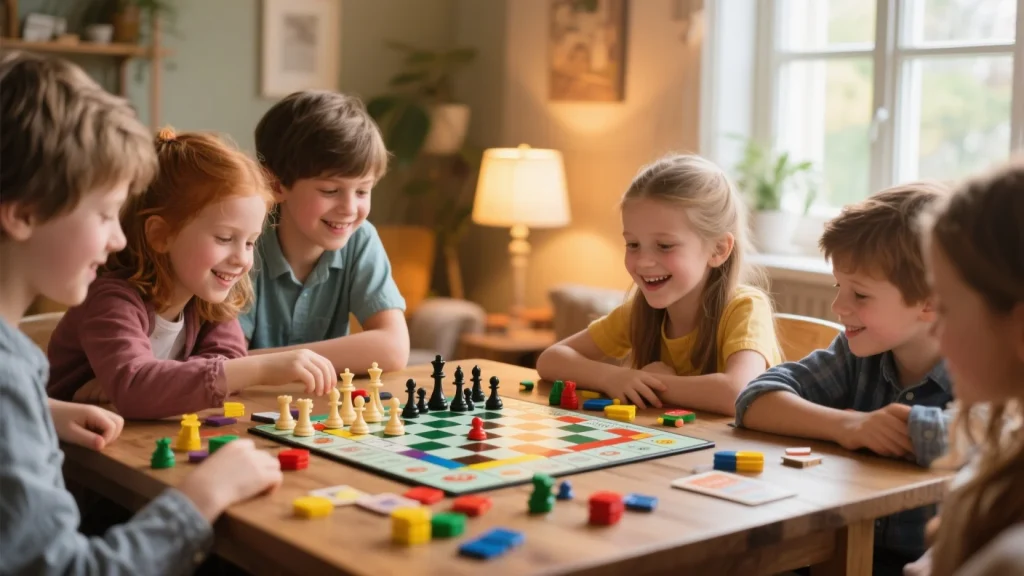
Warum sind Brettspiele gut für Kinder?
1. Kognitive Entwicklung: Ein Fitnessstudio für das Gehirn Ihres Kindes
Brettspiele dienen nicht nur der Unterhaltung – sie tragen buchstäblich dazu bei, das Gehirn zu stärken.
Wie?
Durch das Trainieren wichtiger kognitiver Fähigkeiten, die Kinder benötigen, um in der Schule und darüber hinaus erfolgreich zu sein.
So ergab beispielsweise eine 2021 im „Journal of Child Development“ veröffentlichte Studie, dass Kinder, die wöchentlich strategische Brettspiele spielten, ihre Ergebnisse bei der Problemlösung über einen Zeitraum von sechs Monaten um 20% verbesserten – im Vergleich zu Gleichaltrigen, die dies nicht taten.
Das ist eine enorme Verbesserung gegenüber dem reinen Spielen!
Hier sind die konkreten kognitiven Vorteile, die Brettspiele bieten:
Gedächtnisförderung
Bei vielen Brettspielen müssen sich Kinder Regeln, Kartenpositionen oder vorherige Züge merken.
Nehmen wir das klassische Spiel “Memory” (auch “Concentration” genannt). Das gesamte Spielprinzip dreht sich darum, sich zu merken, wo sich die passenden Karten befinden, nachdem sie umgedreht wurden.
Forscher der Carnegie Mellon University stellten fest, dass das regelmäßige Spielen von Gedächtnisspielen die Kurzzeitgedächtnisleistung von Kindern über einen Zeitraum von drei Monaten hinweg deutlich verbesserte.
Kritisches Denken und Problemlösung
Strategiespiele wie Schach, Dame oder auch einfachere Spiele wie „Vier gewinnt“ zwingen Kinder dazu, mehrere Züge im Voraus zu planen.
Sie müssen:
- Die aktuelle Situation analysieren
- Ziehe mehrere mögliche Züge in Betracht
- Die Reaktionen des Gegners vorhersagen
- Wählen Sie die optimale Strategie aus
Eine Studie von Scholtz et al. (2008) ergab, dass Kinder, die nur eine Stunde pro Woche Schach spielten, im Vergleich zu Kontrollgruppen deutliche Verbesserungen ihrer mathematischen Fähigkeiten zeigten.
Strategische Planung
Wenn Kinder Ressourcenmanagement-Spiele wie „Catan Junior“ oder „Zug um Zug: Die erste Reise“ spielen, lernen sie:
- Entscheidungen mit begrenzten Ressourcen treffen
- Denke mehrere Schritte voraus
- Sich an veränderte Umstände anpassen
Diese Planungsfähigkeiten wirken sich unmittelbar auf den schulischen Erfolg aus, insbesondere in Fächern, die komplexe Problemlösungen erfordern.
2. Soziale Kompetenzen: Sozialkompetenz spielerisch erlernen
Möchten Sie wissen, was einer der wichtigsten Faktoren für langfristigen Erfolg im Leben ist?
Es geht nicht um den IQ. Es geht um soziale Intelligenz.
Brettspiele sind im Grunde genommen ein Training sozialer Kompetenzen, das als Spaß getarnt ist. Sie erfordern von Kindern, dass sie in einem strukturierten Umfeld miteinander interagieren, kommunizieren und zusammenarbeiten.
Die Forschungsergebnisse zeigen Folgendes:
Eine Umfrage der „Learning Through Play Initiative“ aus dem Jahr 2023 ergab, dass 78% der Lehrkräfte angaben, die Konfliktlösungsfähigkeiten ihrer Schüler hätten sich nach der Einführung wöchentlicher Spielrunden verbessert.
Das ist eine ziemlich deutliche Verbesserung im Vergleich zu etwas, das Kindern tatsächlich Spaß macht!
Zusammenarbeit und Teamarbeit
Bei kooperativen Spielen wie „Pandemic: Hot Zone“ oder „Forbidden Island“ müssen die Spieler zusammenarbeiten, um ein gemeinsames Ziel zu erreichen.
Kinder lernen schnell, dass:
- Erfolg hängt davon ab, dass man Kompetenzen und Ressourcen bündelt
- Jeder muss seinen Beitrag leisten
- Kommunikation ist unerlässlich
Die Kinderpsychologin Dr. Laura Markham weist darauf hin, dass kooperative Spiele “Angstgefühle abbauen und Empathie fördern, indem sie Kinder dazu anregen, sich gegenseitig zu unterstützen”.”
Reihenfolge beim Sprechen und Geduld
In der heutigen Welt der sofortigen Befriedigung ist Geduld eine Superkraft.
Brettspiele vermitteln Kindern auf ganz natürliche Weise:
- Warten, bis sie an der Reihe sind
- Plane, während andere spielen
- Bleiben Sie am Ball, auch wenn Sie nicht aktiv mitwirken
Diese Fähigkeiten bilden die Grundlage für ein besseres Verhalten im Unterricht und für soziale Interaktionen.
Lernen, mit Anstand zu gewinnen (und zu verlieren)
Hier ist eine bittere Wahrheit:
Kinder müssen lernen, mit Niederlagen umzugehen.
Brettspiele bieten den perfekten Rahmen, in dem man ohne großen Druck Enttäuschungen erleben und Widerstandsfähigkeit entwickeln kann.
Dr. Tina Payne Bryson, Mitautorin des Buches “The Whole-Brain Child”, erklärt, dass regelmäßiges Spielen Kindern hilft zu verstehen, dass „Rückschläge nur vorübergehend sind und dass sich Anstrengung lohnt“.”
Wenn ein Kind bei „Candy Land“ verliert, lernt es, dass das nicht das Ende der Welt ist – und dass es es noch einmal versuchen kann.
3. Pädagogische Vorteile: Unmerkliches Lernen, das Kindern tatsächlich Spaß macht
Ich möchte euch etwas Bemerkenswertes über Lernbrettspiele erzählen:
Sie können komplexe Konzepte vermitteln, ohne dass die Kinder überhaupt merken, dass sie dabei etwas lernen.
Ich nenne das “unbewusstes Lernen” – und es ist unglaublich effektiv.
Eine Studie der Universität Cambridge aus dem Jahr 2022 ergab, dass Schüler, die zweimal pro Woche Lernbrettspiele spielten, bei standardisierten Mathematiktests um 15% besser abschnitten als diejenigen, die nur traditionellen Unterricht erhielten.
So fördern Brettspiele die schulischen Fähigkeiten:
Entwicklung mathematischer Fähigkeiten
Zahlenbasierte Spiele wie „Sum Swamp“, „Prime Climb“ oder auch „Monopoly Junior“ vermitteln und festigen grundlegende mathematische Konzepte:
- Zählen
- Addition und Subtraktion
- Wahrscheinlichkeit
- Geldmanagement
Untersuchungen von ’Parenting Science“ zeigen, dass einfache Spiele mit Zahlenleisten das Verständnis von Vorschulkindern für Zahlen und Rechnen erheblich verbessern können.
Sprach- und Lese- und Schreibfähigkeiten
Wortspiele wirken Wunder, wenn es um den Wortschatz und das Leseverständnis geht.
Spiele wie:
- Scrabble Junior (Rechtschreibung und Wortschatz)
- Apples to Apples Junior (Wortbeziehungen)
- Boggle Junior (Worterkennung)
All dies trägt dazu bei, sprachliche Fähigkeiten auf eine ansprechende Art und Weise zu fördern, die sich nicht wie “Arbeit” anfühlt.”
Eine Studie ergab, dass Kinder, die regelmäßig Wort-Brettspiele spielten, einen um 30% größeren Wortschatz aufwiesen als Gleichaltrige, die dies nicht taten.
Fachwissen
Es gibt Brettspiele zu praktisch jedem Thema:
- Zeitleiste (Geschichte)
- Wildcraft! (Ökologie und Natur)
- Roboter-Schildkröten (Grundlagen des Programmierens)
- Die „Magic School Bus“-Spiele (Naturwissenschaften)
Diese Spiele vermitteln komplexe Konzepte auf leicht verständliche und einprägsame Weise.
4. Emotionale Intelligenz: Resilienz stärken – Schritt für Schritt
Hier ist etwas, was den meisten Eltern nicht bewusst ist:
Brettspiele sind ein Ort, an dem man seine Emotionen trainieren kann.
Sie schaffen ein kontrolliertes Umfeld, in dem Kinder eine Vielzahl von Gefühlen erleben und verarbeiten können – vom Hochgefühl des Sieges bis hin zur Enttäuschung über eine Niederlage.
Laut der Kinderpsychologin Dr. Regine Galanti vermitteln Spiele Kindern, “wie sie mit Enttäuschungen umgehen und Erfolge angemessen feiern können”.”
Schauen wir uns einmal die konkreten emotionalen Vorteile an:
Emotionsregulation
Brettspiele bringen naturgemäß Höhen und Tiefen mit sich – eine perfekte Übung für die Beherrschung der eigenen Gefühle.
Wenn ein Kind:
- Verliert einen Zug
- Wird zum Anfang zurückgeschickt
- Begeht einen strategischen Fehler
- Gewinnt knapp ein spannendes Spiel
Sie lernen, ihre Gefühle in Echtzeit zu bewältigen.
Diese Erfahrungen schaffen neuronale Verbindungen für die emotionale Regulierung, die sich auch auf andere Lebensbereiche übertragen lassen.
Vertrauen und Selbstwertgefühl aufbauen
Das Erlernen von Spielregeln, das Entwickeln von Strategien und das Erleben gelegentlicher Siege tragen allesamt zum Kompetenzgefühl eines Kindes bei.
Für schüchterne oder ängstliche Kinder bieten Brettspiele einen strukturierten Rahmen, in dem sie Erfolgserlebnisse sammeln und nach und nach Selbstvertrauen aufbauen können.
Stressabbau und Freude
Übersehen Sie nicht den einfachen Vorteil, den Spaß mit sich bringt!
Das Lachen und die Freude beim gemeinsamen Spielen mit der Familie lösen die Ausschüttung von Endorphinen aus – dem natürlichen Stresskiller.
In unserer von hohem Druck geprägten Welt ist es für die psychische Gesundheit von unschätzbarem Wert, Kindern regelmäßig Gelegenheit zum Spielen und Lachen zu geben.
5. Körperliche Entwicklung: Verfeinerung der motorischen Fähigkeiten
Auch wenn Brettspiele körperlich nicht so anstrengend sind wie Sport, tragen sie doch erheblich zur körperlichen Entwicklung bei – insbesondere zur Feinmotorik.
So geht's:
Feinmotorik
Viele Brettspiele erfordern präzise Züge:
- Kleine Teile transportieren
- Stapelblöcke (Jenga)
- Ziehkarten
- Würfeln
- Spinner manipulieren
Diese Aktivitäten fördern die Hand-Augen-Koordination und die Feinmotorik – Fähigkeiten, die für das Schreiben, Zeichnen und andere schulische Aufgaben unerlässlich sind.
Räumliches Denkvermögen
Spiele wie Tetris, Blockus oder Rush Hour Jr. helfen Kindern dabei, zu verstehen, wie Objekte im Raum zueinander stehen.
Diese Fähigkeit zum räumlichen Denken ist ein entscheidender Indikator für den Erfolg in folgenden Bereichen:
- Mathematik
- Ingenieurwesen
- Architektur
- Kunst
Untersuchungen zeigen, dass ausgeprägte räumliche Denkfähigkeiten mit späteren höheren Leistungen in den MINT-Fächern korrelieren.
6. Familienzusammenhalt: Dauerhafte Bindungen schaffen
Hier ist eine Statistik, die mich schockiert hat:
Die durchschnittliche amerikanische Familie verbringt weniger als 40 Minuten pro Tag mit sinnvollen Gesprächen.
Brettspiele bieten die perfekte Gelegenheit, diesen Trend umzukehren.
Sie bringen Familien zusammen und ermöglichen so einen gezielten, bildschirmfreien Austausch, der Beziehungen stärkt und Erinnerungen schafft.
Die klinische Psychologin Dr. Beatrice Tauber Prior empfiehlt gemeinsame Spieleabende in der Familie als wirksames Mittel, um die emotionale Bindung zu stärken.
Gemeinsame Zeit ohne Bildschirme
In unserer hypervernetzten Welt ist Zeit, in der man wirklich einmal komplett abschalten kann, selten und wertvoll.
Brettspiele bieten einen perfekten Anlass, die elektronischen Geräte beiseite zu legen und sich persönlich miteinander zu beschäftigen.
Wie Brian Magerko, Professor für digitale Medien an der Georgia Tech, feststellte: “Die Tatsache, dass man sich physisch am selben Ort befindet, sich an einem Tisch gegenüber sitzt und gemeinsam Pizza isst – das ist etwas, das das Online-Spielen digitaler Spiele einfach nicht ersetzen kann.”
Unvergessliche Erinnerungen schaffen
Denken Sie doch einmal kurz an Ihre eigene Kindheit zurück.
Wahrscheinlich gehören zu Ihren schönsten Erinnerungen auch gemeinsame Spiele mit der Familie oder Freunden.
Brettspiele schaffen für Ihre Kinder genau diese Erinnerungsanker – positive Assoziationen, die ihnen noch Jahrzehnte lang erhalten bleiben werden.
7. Altersgerechte Empfehlungen für den Einstieg im Jahr 2025
Sind Sie bereit, mehr Brettspiele in Ihren Familienalltag zu integrieren?
Hier sind einige Top-Empfehlungen nach Altersgruppen für das Jahr 2025:
Für Vorschulkinder (2–5 Jahre)
Bei diesen Spielen stehen einfache Regeln und grundlegende Konzepte im Mittelpunkt:
- First Orchard – Ein kooperatives Spiel rund ums Ernten, bei dem die Kinder das Erkennen von Farben und das Abwarten, bis man an der Reihe ist, lernen
- Huhu, Eule! – Die Spieler arbeiten zusammen, um den Eulen zu helfen, zu ihrem Nest zurückzufliegen
- Das Spiel „Das listige, naschhafte Eichhörnchen“ – Fördert die Feinmotorik mit niedlichen Eichhörnchen-Zangen
- Hi Ho! Cherry-O – Ein klassisches Zählspiel, ideal für die Kleinen
Für die Unterstufe (6–8 Jahre)
Diese Spiele bieten mehr strategische Tiefe und sind dennoch leicht zugänglich:
- Ticket to Ride: Die erste Reise – Vereinfachte Version des beliebten Routenplanungsspiels
- Catan Junior – Ressourcenmanagement mit Piraten-Thema
- Labyrinth – Labyrinthspiel, das die Planungsfähigkeiten fördert
- Kingdomino – Ein Legespiel, das 2017 als „Spiel des Jahres“ ausgezeichnet wurde
Für die höhere Grundschulstufe (9–12 Jahre)
Diese Spiele bieten tiefgreifendere Strategien und längere Spielzeiten:
- Pandemie – Ein kooperatives Spiel, bei dem die Spieler gemeinsam daran arbeiten, Krankheitsausbrüche zu verhindern
- Pracht – Ein Wirtschafts- und Aufbau-Spiel mit einfachen Regeln, aber tiefgreifender Strategie
- Flügelspannweite – Ein Spiel, bei dem man Vögel sammelt und dabei ökologische Konzepte lernt
- Die verbotene Insel – Ein auf Teamwork basierendes Abenteuerspiel
Fazit: Starte deine Brettspiel-Revolution
Die Beweislage ist erdrückend: Brettspiele bieten Kindern eine einzigartige Kombination von Vorteilen, die die kognitive, soziale, emotionale und körperliche Entwicklung umfassen.
Im Gegensatz zu vielen digitalen Alternativen schaffen Brettspiele echte zwischenmenschliche Beziehungen und vermitteln gleichzeitig wertvolle Lebenskompetenzen.
Hier ist also meine Herausforderung an euch:
Führen Sie einen regelmäßigen Spieleabend mit der Familie ein. Schon einmal pro Woche kann dies einen erheblichen Einfluss auf die Entwicklung Ihres Kindes haben.
Beginnen Sie mit Spielen, die dem Alter und den Interessen Ihres Kindes entsprechen, und führen Sie dann nach und nach komplexere Varianten ein, wenn es älter wird.
Die Investition ist gering, aber die Erträge sind enorm.
Denn wenn man versteht, warum Brettspiele für Kinder von Vorteil sind, wird einem klar, dass sie nicht nur Unterhaltung sind – sie sind unverzichtbare Hilfsmittel, um in einer immer komplexer werdenden Welt vielseitige und kompetente Kinder großzuziehen.
 German
  English
  Chinese
  French
  Spanish