
Creating your own board game for a school project isn’t just fun—it’s a killer way to show what you’ve learned while flexing your creative muscles. I’ve seen countless students transform boring assignments into engaging experiences through custom board games, and today as a professional 桌遊製造商, I’m going to show you exactly how to do it.

The Power of Board Game Projects
Before we dive into the how-to, let me tell you why board games make such awesome school projects. When you create a game, you’re not just regurgitating facts—you’re synthesizing information, designing an experience, and proving you truly understand the material. It’s the difference between memorizing and mastering.
Now let’s break down how to make a board game for a school project that will impress your teacher and be genuinely fun to play.
How to Make a Board Game for School Projects
Getting Started: Materials You’ll Need
The beauty of board game projects is that they don’t require fancy supplies. Here’s what you’ll need:
- Poster board or construction paper for the game board
- Markers, colored pencils, or crayons
- 剪刀
- Small objects for game pieces (buttons, erasers, or printed pawns)
- 1-2 dice
- Index cards for question cards or action cards
Pro tip: Before buying anything new, raid your junk drawer. Old game pieces, cardboard boxes, and craft supplies can all be repurposed for your project.
Planning Your Game Concept
This is the foundation of your project, so don’t skip straight to design. Take time to:
- Define your learning objectives – What specific content needs to be included?
- Choose a game format – Will it be a trivia game, a strategy game, or something unique?
- Decide on a theme – How can you make the content interesting through theme?
- Develop basic rules – Keep them simple enough that anyone can learn in 2-3 minutes
- Determine win conditions – How will players know when they’ve won?
Many students default to simply making a trivia game with questions about their subject. While that works, think about how you might incorporate the content more creatively into the actual gameplay mechanics.
Designing Your Game Board
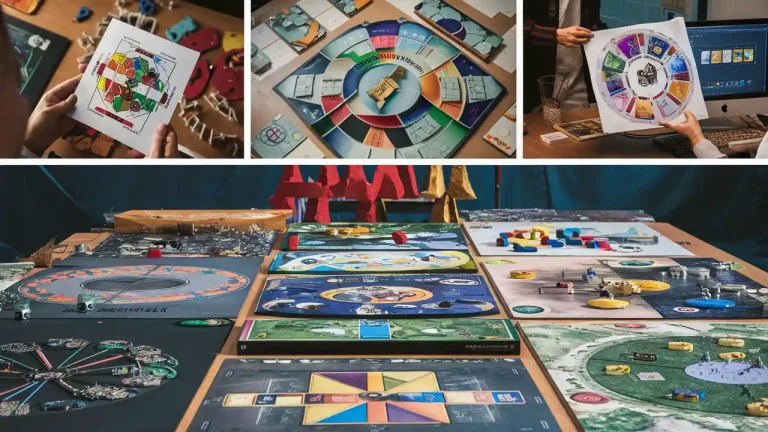
Your game board is the visual centerpiece of your project, so make it count:
Board Layout Options:
- Linear path (like Monopoly or Candy Land)
- Branching paths with choices
- Grid-based (like chess or checkers)
- Hub and spoke design (central area with paths leading outward)
Whatever design you choose, make sure it:
- Reflects your theme visually
- Has clear spaces for players to land on
- Includes special action spaces to keep gameplay interesting
- Uses color and imagery to reinforce your academic content
When I worked with a class of 6th graders, one student created a language arts game with a farm theme where each section of the board represented different parts of speech. The visual metaphor helped reinforce the content while making the game more engaging.
Creating Questions and Content Cards
The heart of most educational board games is the content cards. Here’s how to make them effective:
- Vary the difficulty levels – Include some easy wins and some challenging questions
- Use clear, concise language – Avoid confusing wording
- Cover multiple aspects of your subject material
- Create an answer key for your teacher to easily check accuracy
- Balance learning and fun – Some cards should advance gameplay, not just test knowledge
Remember that content cards don’t have to be just questions. They can be:
- Action cards (“Move ahead 3 spaces if you can name 3 state capitals”)
- Challenge cards (“Draw a quick sketch of a cell for other players to identify”)
- Role-play scenarios (“You’re a historical figure. Explain your most famous decision”)
Game Mechanics That Work for School Projects
The way your game plays is just as important as the content it covers. Here are some proven mechanics:
For Science Projects:
- Collection mechanics (gather elements to create compounds)
- Exploration (discover and identify specimens)
- Simulation (model scientific processes)
For History Projects:
- Resource management (build civilizations with period-accurate limitations)
- Timeline progression (advance through historical periods)
- Role-playing historical figures or groups
For Literature Projects:
- Character development paths
- Plot progression mechanics
- Setting-based challenges
For Math Projects:
- Calculation-based movement
- Probability and statistics in gameplay
- Geometry in board design
Testing and Refining Your Game
Before submitting your project, you need to playtest. This step is crucial! Here’s what to look for:
- Gameplay duration – A good school project game should last 15-30 minutes
- Balance – Is it too easy? Too hard? Do early leaders always win?
- 訂婚 – Are players learning while having fun?
- Rule clarity – Can others understand how to play without extensive explanation?
Have friends or family members try your game and give honest feedback. Watch for confusion points and places where the game drags or becomes frustrating.
Adding Professional Touches
Want to take your board game project to the next level? Here are some advanced techniques:
- Create a game box with a professional-looking cover
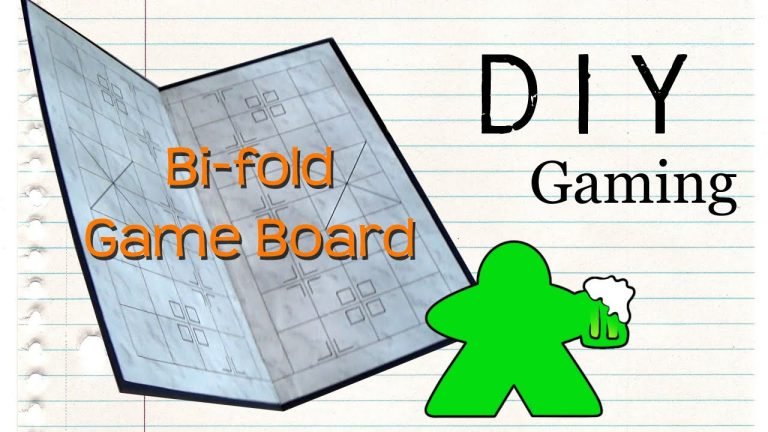
- Design a folding board (like commercial board games)
- Include a printed rulebook with examples
- Add thematic design elements (borders, fonts, illustrations)
- Create custom game pieces that relate to your theme
One student I worked with created custom wooden game pieces for his American Revolution board game—British soldiers on one side and Continental Army on the other. The detail immediately elevated the entire project.
Successfully Presenting Your Board Game
When it comes time to present your project, don’t just hand it in! Create a brief presentation that covers:
- The learning objectives your game addresses
- Your design choices and how they relate to the content
- A quick demonstration of gameplay
- What you learned through the creation process
- Challenges you overcame
This meta-commentary shows your teacher that you understand both the subject matter and the pedagogical value of your creation.
應避免的常見錯誤
I’ve seen hundreds of student-created board games, and these are the pitfalls you’ll want to dodge:
- Too complex – Games with pages of rules rarely get played
- Too simple – “Roll and move” with random trivia questions feels lazy
- Poor balance – If one strategy always wins, the game feels broken
- Weak connection to content – The academic material should be integral, not an afterthought
- Unclear rules – If players constantly need clarification, the game fails
Real-World Examples That Worked
Let me share a few standout student projects I’ve encountered:
A middle schooler created a railbuilding game for a history project where historical facts weren’t just trivia questions but were incorporated into the game mechanics. For instance, for every section of rail built, a worker (game resource) would be lost—teaching about the human cost of industrialization through gameplay rather than direct questioning.
Another student designed a language arts game where players built stories collaboratively, earning points for correct grammar usage and creative vocabulary—effectively turning grammar practice into a creative challenge.
Why This Approach Works
The reason board game projects are so effective is that they tap into multiple learning modalities simultaneously:
- Visual learning through board design
- Kinesthetic learning through physical gameplay
- Logical thinking through rule systems
- Social learning through player interaction
- Content mastery through integration of subject material
最終想法
Creating a board game for a school project combines creativity with academic rigor in a way few other assignments can match. By following the steps I’ve outlined, you’ll create something that’s not just educational but genuinely enjoyable—the holy grail of school projects.
Remember that the best educational games don’t feel like studying. They naturally lead players to engage with the content through gameplay that’s intuitive and fun. So as you work on how to make a board game for a school project, keep asking yourself: “Would I want to play this even if it wasn’t for a grade?”
If the answer is yes, you’re on the right track to creating something special.
 Chinese
  English
  German
  French
  Spanish