

Want to create something fun that keeps your kids engaged for hours?
En la actualidad, como profesional fabricante de juegos de mesa, I’m going to show you exactly how to make your own board game for kids.
In fact, these are the same DIY board game techniques that have helped thousands of parents create custom games their children actually want to play.
Entremos de lleno.

Why Making DIY Board Games Rocks
Seamos realistas:
Store-bought board games can get expensive. And they’re not always tailored to what your kids are actually interested in.
That’s where DIY board games come in.
When you create your own board game, you get to:
- Customize it to your child’s interests
- Target specific learning skills
- Save money on entertainment
- Create something that grows with your child
- Bond through the creative process
I’ve found that homemade games actually get played more than expensive store-bought ones.
¿Por qué?
Because kids are invested in something they helped create!
What You’ll Need: Board Game Supplies
Before we jump into the creation process, let’s gather our materials.
Esto es lo que necesitarás:
- Square cardboard (at least 12″x12″) or poster board
- Construction paper (various colors)
- Markers, crayons, or paint
- Tijeras
- Glue or tape
- Dados
- Game pieces (can be small toys, rocks, buttons, or custom pieces)
- Cards (optional – can be made from index cards)
- Stickers (optional for decoration)
Pro Tip: Don’t have poster board? No problem. You can use the underside of wrapping paper, a large cereal box flattened out, or even tape together several sheets of paper.
How to Make Your Own Board Game for Kids: Step-by-Step Creation Process
Now for the fun part! Here’s my proven process for creating an awesome DIY board game for kids.
Step 1: Choose Your Game Theme
Every great board game starts with a compelling theme.
Ask your kids what they’re into right now. Is it:
- Space exploration?
- Dinosaurs?
- Unicorns and rainbows?
- Pirates and treasure?
- Favorite cartoon characters?
The theme will guide your design decisions and make the game instantly appealing to your child.
In my experience, games with themes kids love get played 3x more often than generic ones.
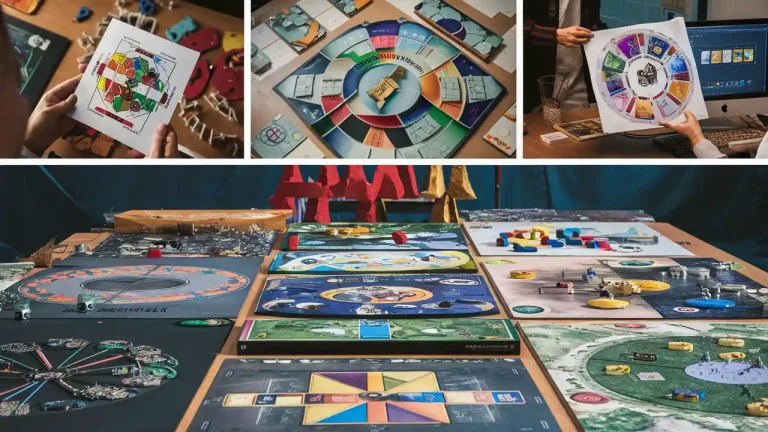
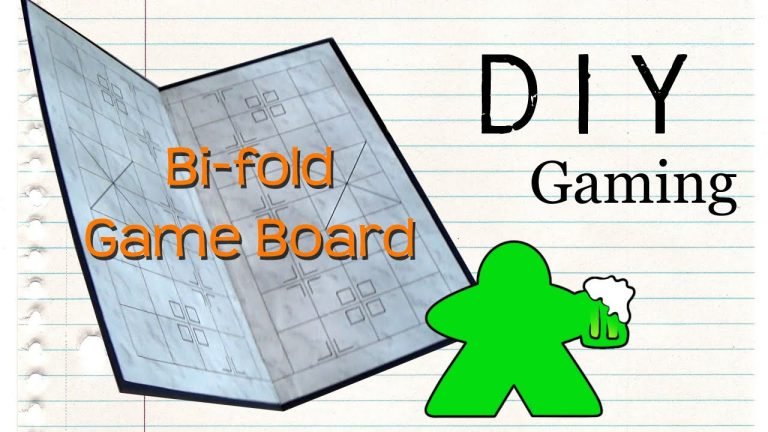
Step 2: Design Your Game Board
Now it’s time to create the game board itself.
Here are some popular board layouts:
- Linear track (like Candy Land or Chutes and Ladders)
- Circular path (like Monopoly)
- Rutas de bifurcación (giving players choices)
- Grid layout (como el ajedrez o las damas)
For beginners, I recommend starting with a simple linear or circular path.
Here’s how to do it:
- Draw the basic path on your cardboard using pencil first
- Divide the path into squares or spaces (at least 30 for a good game length)
- Trace over your pencil with marker
- Color code different spaces (some blue, some red, some green, etc.)
- Add special spaces (shortcuts, penalty spaces, bonus spaces)
- Decorate the board with images related to your theme
Remember to mark clear “Start” and “Finish” spaces!
Step 3: Create Game Cards and Rules
Board game crafts for kids are more engaging when there are challenges along the way.
Create different card categories like:
- Action cards (Do 5 jumping jacks!)
- Question cards (educational questions)
- Challenge cards (Draw with your eyes closed)
- Bonus cards (Move ahead 3 spaces)
- Penalty cards (Go back 2 spaces)
Write the rules of your game. Keep them simple for younger kids, more complex for older ones.
Basic rules might include:
- Roll the dice to move
- Land on a colored space? Draw a matching card
- Follow the instructions on the card
- First player to reach the end wins
Pro Tip: Test play your game before finalizing the rules. You’ll quickly see what works and what needs adjusting.
Making Your Board Game Educational
Here’s where DIY board games really shine over store-bought ones.
You can easily incorporate learning into your custom board games:
- Math skills: Include counting, addition, or multiplication challenges
- Language arts: Add spelling words or reading comprehension questions
- Science: Include fact cards about animals, planets, or experiments
- Geography: Create challenges about states, countries, or landmarks
- Problem-solving: Design puzzles that must be solved to advance
For example, I once helped a family create a “Times Table Trek” game where kids had to correctly answer multiplication problems to move ahead. Their 8-year-old’s math scores improved within just a month of playing regularly!
Age-Appropriate Board Game Activities
Different ages need different types of board games:
Ages 3-5:
- Simple paths with 15-20 spaces
- Picture-based instructions
- Basic counting (move ahead 1-3 spaces)
- Physical actions (hop like a frog, roar like a lion)
Ages 6-8:
- Longer paths with 20-30 spaces
- Simple reading required
- Basic math challenges
- Memory activities
- Creative challenges (draw something specific)
Ages 9-12:
- Complex paths with 30+ spaces
- Strategy elements
- More advanced academic content
- Team challenges
Advanced Board Game Design Tips
Ready to take your homemade board game to the next level?
Try these advanced design tips:
1. Add 3D Elements
Make your board game pop with:
- Small boxes as obstacles
- Clay figurines as custom game pieces
- Folded paper tents as special spaces
- Mini treasure chests holding game cards
2. Create Special Game Pieces
Instead of using boring pawns, create custom game pieces that match your theme:
- Dinosaur figures for a prehistoric adventure
- Rocket ships for a space game
- Different colored gems for a treasure hunt
- Miniature characters with photos of family members
3. Incorporate Digital Elements
It’s 2025, after all! Consider adding:
- QR codes on spaces that link to videos or sounds
- Augmented reality elements using free AR apps
- Digital timers for timed challenges
4. Design Expandable Content
Create your game with expansion packs in mind:
- Leave room on the board for new paths
- Create additional card sets for different skill levels
- Design holiday-themed add-ons
Real-World Board Game Success Stories
I’ve seen some incredible DIY board games over the years. Here are a few that stand out:
The Spelling Safari Created by a mom for her 7-year-old struggling with spelling, this jungle-themed game had players advancing by correctly spelling words. The genius part? She used the child’s actual spelling list from school each week.
Chore Challenge A dad created this game where landing on certain spaces meant drawing a “chore card.” Complete the quick chore (put away 5 toys, etc.) and earn bonus moves. His kids cleaned the entire house while playing!
Math Masters A teacher designed this for her class where different colored spaces corresponded to different difficulty levels of math problems. Kids could choose their challenge level, making it work for mixed ability groups.
Troubleshooting Common Board Game Problems
Even the best board games run into issues. Here’s how to fix the most common problems:
Problem: Kids get bored halfway through Solution: Make sure no player falls too far behind. Add more “catch-up” mechanisms like shortcuts or bonus spaces.
Problem: Game is too easy/hard Solution: Create tiered challenge cards (easy, medium, hard) and let players choose their difficulty.
Problem: Board falls apart during play Solution: Laminate the board or cover it with clear contact paper for durability.
Problem: Lost game pieces Solution: Create a storage container that’s part of the game (treasure chest, spacecraft, etc.) and make putting pieces away part of the game end.
Making Board Games a Regular Family Activity
Creating DIY board games shouldn’t be a one-time activity. Here’s how to make it part of your family culture:
- Host a monthly “Game Creation Day” where everyone designs mini-games
- Create seasonal games for different holidays
- Challenge each family member to design a game teaching something they’re good at
- Document your creations in a “Game Design Journal”
- Share games with friends and family for feedback
In my experience, families that create games together build incredible creative problem-solving skills that transfer to other areas of life.
Reflexiones finales
Learning how to make your own board game for kids is more than just a craft project. It’s a way to create custom learning experiences, build family bonds, and develop creative thinking skills.
The best part? Unlike expensive toys that get forgotten in days, homemade board games create memories that last for years.
So gather your supplies, pick a theme, and start creating! Your kids will thank you for the fun now—and the skills they build along the way.
And remember: the most successful homemade board games aren’t necessarily the prettiest or most complex. They’re the ones that make your kids say, “Can we play again?”
Now I’d love to hear from you: What type of DIY board game do you plan to make with your kids? Let me know in the comments!
 Spanish
  English
  Chinese
  German
  French